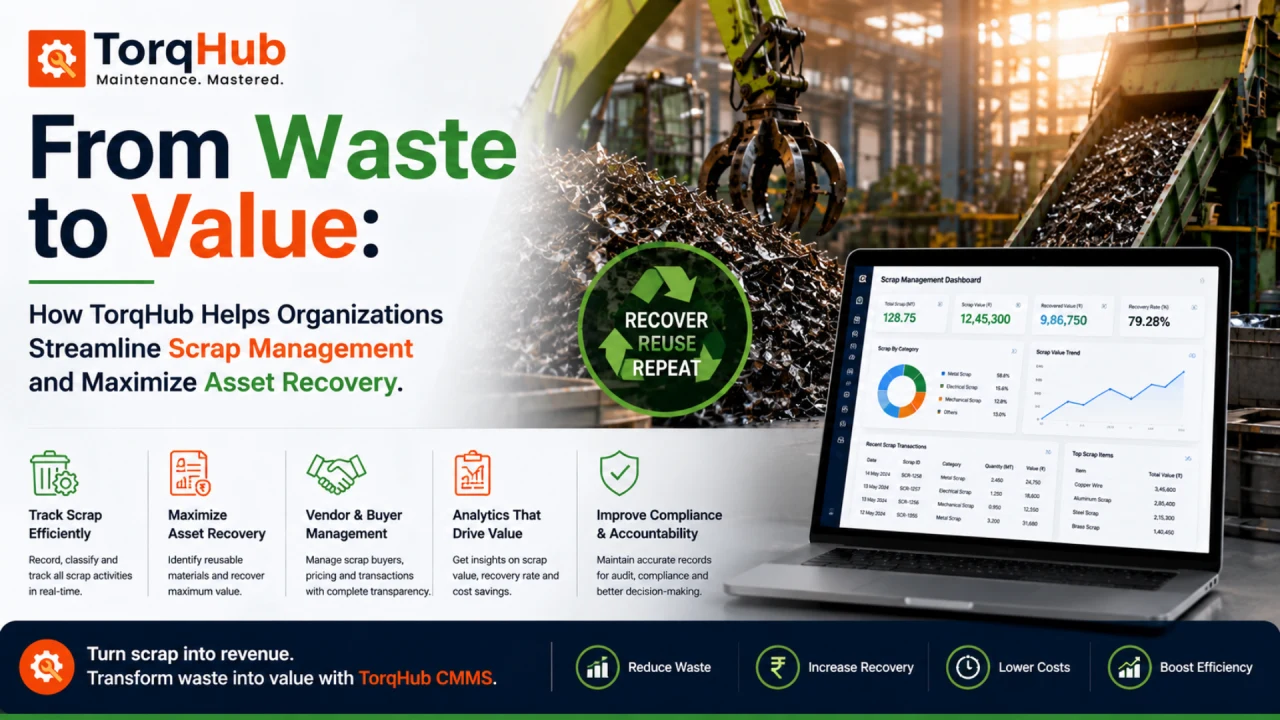
For many organizations, scrap is often viewed as the final stage of an asset's lifecycle — a necessary disposal process with little strategic value. However, ineffective scrap management can lead to financial losses, inventory inaccuracies, compliance risks, and missed opportunities to recover value from retired assets.
A digital approach to scrap management transforms this process. By tracking end-of-life assets, automating approval workflows, and maintaining accurate records, organizations can improve operational efficiency while recovering maximum value from obsolete equipment and materials.
TorqHub CMMS provides a centralized scrap management solution that helps businesses manage the complete disposal lifecycle, ensuring transparency, compliance, and better asset recovery.
Why Scrap Management Is More Than Just Disposal
Every organization eventually retires assets due to wear and tear, obsolescence, or replacement. These may include:
- Machinery and production equipment
- Spare parts
- Tools and instruments
- Electronic equipment
- Office assets
- Industrial materials
- Defective inventory
Without a structured process, valuable recyclable materials and reusable components may be overlooked, resulting in unnecessary waste and higher operational costs.
An effective scrap management strategy ensures that retired assets are properly tracked, evaluated, approved, and disposed of while maximizing any remaining value.
Challenges of Traditional Scrap Management
Many organizations still rely on manual processes such as spreadsheets, paperwork, or disconnected systems to manage scrap.
This often creates challenges including:
- Poor visibility of scrap inventory
- Inaccurate asset records
- Unauthorized disposal
- Delayed approval processes
- Difficulty during audits
- Loss of recoverable asset value
- Inefficient inventory updates
These issues not only increase administrative effort but also make it difficult to monitor the complete lifecycle of an asset.
How TorqHub Simplifies Scrap Management
Centralized Scrap Asset Records
TorqHub stores all scrap-related information in one centralized platform, allowing maintenance and asset managers to maintain complete visibility over retired assets.
Users can quickly access:
- Asset information
- Scrap status
- Disposal dates
- Asset value
- Supporting documents
- Approval history
Having a single source of truth improves accountability and simplifies asset tracking.
Digital Approval Workflows
Disposing of assets often requires approvals from multiple stakeholders.
TorqHub automates this process through configurable approval workflows, ensuring that every scrap request is reviewed, approved, and documented before disposal.
This reduces paperwork, accelerates decision-making, and creates a complete audit trail.
Complete Asset Lifecycle Tracking
Scrap management should never be isolated from asset management.
TorqHub connects scrap records with the complete asset lifecycle, allowing organizations to review:
- Purchase details
- Maintenance history
- Breakdown records
- Repair costs
- Inspection reports
- Asset performance
This helps maintenance managers make informed decisions about whether an asset should be repaired, refurbished, or retired.
Inventory Synchronization
When an asset or spare part is scrapped, inventory records should reflect the change immediately.
TorqHub automatically updates inventory data after approved scrap transactions, helping organizations maintain accurate stock levels and eliminate duplicate records.
Real-Time Reporting and Analytics
TorqHub provides real-time dashboards and reports that offer valuable insights into scrap activities, including:
- Scrap quantity trends
- Asset retirement history
- Scrap value recovered
- Department-wise disposal
- Approval timelines
- Inventory adjustments
These insights support better planning, budgeting, and asset replacement decisions.
Turning Waste into Business Value
Effective scrap management is about more than removing unwanted assets — it is about recovering value wherever possible.
With TorqHub, organizations can identify reusable components, monitor recyclable materials, and track salvage opportunities. This enables businesses to:
- Recover value from retired assets
- Reduce procurement costs
- Improve inventory utilization
- Support sustainable business practices
- Reduce operational waste
Instead of viewing scrap as a cost, organizations can treat it as an opportunity to improve financial and operational performance.
Key Benefits of TorqHub Scrap Management
Improve Asset Visibility
Maintain complete records of every retired asset throughout the disposal process.
Maximize Asset Recovery
Identify opportunities to recover value through reuse, recycling, or resale.
Enhance Compliance
Maintain digital approval records and disposal history for audits and regulatory requirements.
Improve Inventory Accuracy
Automatically update inventory records following approved scrap transactions.
Streamline Approval Processes
Replace manual paperwork with automated workflows that improve efficiency and accountability.
Support Sustainability Goals
Reduce waste, increase recycling opportunities, and encourage responsible asset disposal.
Industries That Benefit
TorqHub Scrap Management supports organizations across multiple industries, including:
- Manufacturing
- Facility Management
- Automotive
- Healthcare
- Warehousing and Logistics
- Utilities
- Hospitality
- Educational Institutions
- Commercial Real Estate
Any business managing physical assets can benefit from a structured and digital scrap management process.
Why Choose TorqHub?
TorqHub CMMS combines Asset Management, Preventive Maintenance, Work Order Management, Spare Parts Management, Inventory Control, Breakdown Management, and Scrap Management into one integrated platform.
By digitizing the scrap management process, organizations gain better visibility, stronger governance, improved inventory accuracy, and greater value recovery from retired assets.
Conclusion
Scrap management is an essential part of effective asset lifecycle management. Organizations that rely on manual processes often miss opportunities to recover value, maintain accurate records, and improve operational efficiency.
TorqHub helps businesses transform scrap management through centralized tracking, automated approval workflows, inventory synchronization, and real-time reporting.