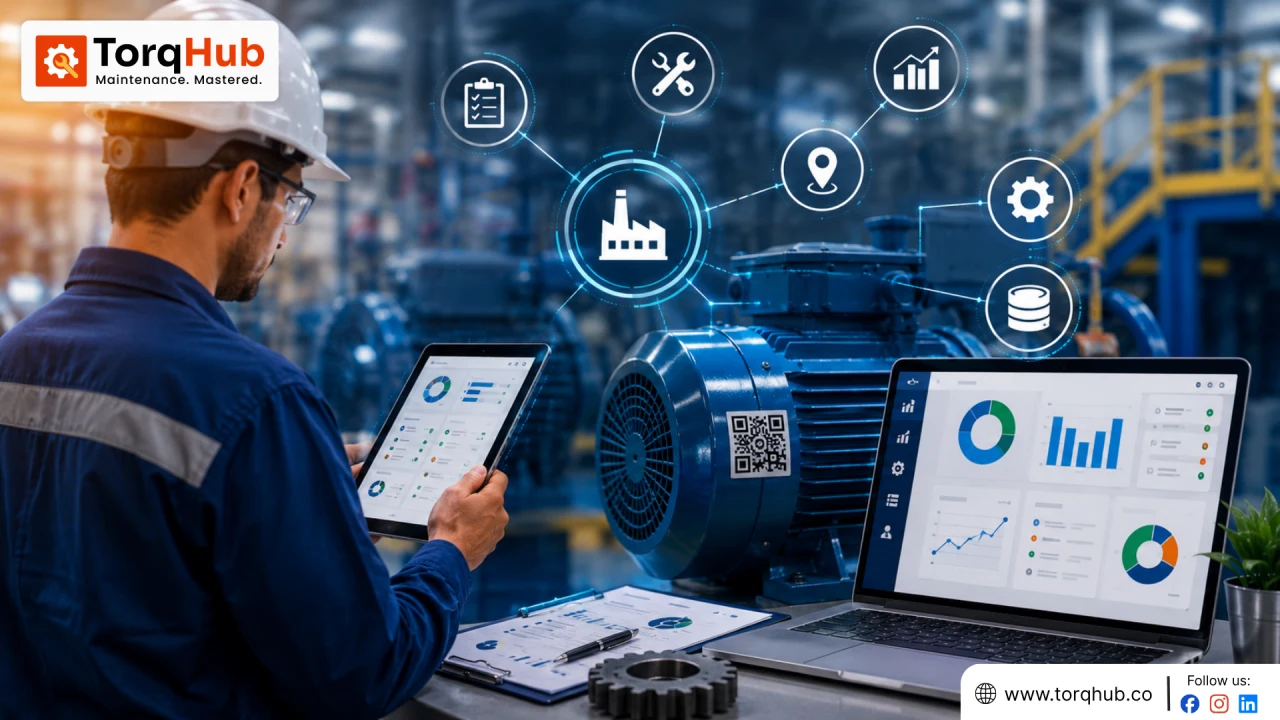
In today's industrial environment, equipment visibility is essential for maintenance and reliable operations. As organizations manage hundreds or thousands of machines, tools, and other physical assets, relying on spreadsheets, paper records, or disconnected systems makes it hard to know what assets they have, their current condition, and how much they cost to maintain.
This is where asset management software can make a difference.
A modern CMMS helps organizations register, track, maintain, and optimize equipment throughout its lifecycle. Instead of scattered records and manual decisions, TorqHub, for example, provides centralized asset registration, QR/barcode identification, location tracking, maintenance history, spare-parts mapping, and lifecycle cost tracking.
What Is Asset Management Software?
Asset management software is a digital solution that helps organizations register, track, maintain, and optimize physical equipment throughout its lifecycle.
Instead of maintaining separate records for different machines, teams can create a centralized digital asset register containing information such as:
- Asset name and identification number
- Manufacturer and model
- Serial number
- Installation date
- Location
- Current asset status
- Warranty information
- Maintenance history
- Spare parts and components
- Technical documents and certificates
- Repair and maintenance costs
- Expected lifespan
This creates a single source of truth for equipment and gives maintenance teams faster access to the information they need.
Why Traditional Asset Tracking Isn't Enough
Many maintenance teams still depend on spreadsheets and manual records. While these methods may work for a small number of assets, they become increasingly difficult to manage as operations grow.
Common challenges include:
Missing or outdated asset information
Equipment details can become scattered across spreadsheets, documents, and emails.
Difficulty locating equipment
When assets move between plants, departments, production lines, or work areas, maintaining accurate location information becomes challenging.
Incomplete maintenance history
Technicians may not have quick access to previous breakdowns, repairs, inspections, or preventive maintenance activities.
Limited cost visibility
Knowing an asset's purchase price isn't enough. Organizations also need visibility into repair, maintenance, spare-parts, and lifecycle costs.
Delayed maintenance decisions
Without reliable asset data, managers may struggle to determine whether equipment should be repaired, maintained, upgraded, or retired.
A centralized asset management platform addresses these challenges by bringing critical equipment information together.
Key Features of Asset Management Software
1. Centralized Asset Register
A digital asset register provides a structured record of every piece of equipment.
Teams can capture asset codes, categories, manufacturers, models, serial numbers, installation dates, and other specifications in one place. TorqHub's asset management module is built around this centralized asset register.
This makes it easier to search, filter, update, and manage equipment information.
2. QR Code & Barcode Identification
Finding equipment information shouldn't require searching through multiple spreadsheets.
With QR code and barcode identification, organizations can digitally tag an asset and quickly access its specifications, maintenance history, warranty information, and other relevant records.
This is particularly useful for large facilities where technicians need quick access to information while working on the shop floor.
3. Asset Location Tracking
Knowing where an asset is located is a fundamental part of effective asset management.
Digital asset management allows organizations to associate equipment with:
- Plants
- Departments
- Production lines
- Work areas
- Cells
- Facilities
This improves asset visibility and makes it easier for maintenance teams to locate equipment when service is required.
4. Complete Maintenance History
Every maintenance activity adds valuable information to an asset's history.
A connected CMMS can associate breakdowns, preventive maintenance activities, spare parts, tools, and work orders with individual assets.
Over time, this creates a detailed maintenance history that can help teams identify recurring issues and understand equipment performance.
5. Spare Parts & Component Mapping
Technicians often need specific components to complete a maintenance task.
By linking spare parts and components to individual assets, maintenance teams can quickly understand which parts are associated with a particular machine.
This also connects asset management with inventory management, helping teams improve maintenance preparation.
6. Asset Lifecycle Cost Tracking
The real cost of an asset goes beyond its purchase price.
Organizations need to understand how much they spend on:
- Repairs
- Preventive maintenance
- Spare parts
- Labor
- Service costs
- Other lifecycle expenses
Lifecycle cost tracking provides a better picture of the total cost of ownership, supporting more informed repair, replacement, and investment decisions.
How Asset Management Software Helps Reduce Downtime
Unexpected equipment failures can disrupt production and create additional maintenance costs.
Asset management software helps teams build better visibility around equipment condition, breakdown history, and asset status.
When asset management is connected with preventive maintenance, breakdown management, work orders, spare parts, and analytics, maintenance teams can move toward a more proactive maintenance strategy. Instead of simply reacting after equipment fails, teams can use historical information and preventive maintenance schedules to identify recurring issues and plan maintenance activities more effectively.
Asset Management + Preventive Maintenance
Asset management tells you what you have and how it's performing.
Preventive maintenance helps you keep it operating reliably.
Together, they create a stronger maintenance workflow:
Asset → Maintenance Schedule → Work Order → Technician → Parts Used → Completion → Maintenance History
With a CMMS, preventive maintenance schedules can be associated with individual assets, while maintenance activities and service records are retained as part of the asset history.
This creates greater traceability and helps maintenance teams stay organized.
From Asset Tracking to Lifecycle Management
Effective asset management isn't simply about knowing where a machine is.
It is about managing the asset throughout its entire lifecycle:
Purchase → Installation → Operation → Maintenance → Repair → Performance Monitoring → Replacement/Retirement
A modern asset management system can capture information throughout this journey, including asset status, warranty details, technical documents, service events, and lifecycle costs.
This gives maintenance teams a complete picture of asset performance and helps them make better long-term decisions.
How CMMS Makes Asset Management Smarter
Asset management becomes even more powerful when it's part of a complete Computerized Maintenance Management System (CMMS).
Instead of managing asset information separately, organizations can connect:
Asset Management | Preventive Maintenance | Work Orders | Breakdown Management | Spare Parts | Maintenance History | Reports & Analytics
This connected structure allows maintenance data to flow across different activities and gives managers better visibility into how the CMMS platform is being used.
How TorqHub Helps Optimize Equipment Management
TorqHub helps organizations move beyond basic asset tracking toward digital asset lifecycle management.
With TorqHub, maintenance teams can:
- Create a centralized asset register
- Track equipment locations and status
- Generate QR/barcode asset identification
- Access complete maintenance history
- Store technical documents and certificates
- Track warranty and expected lifespan
- Map spare parts and components to assets
- Track asset lifecycle costs
- Connect assets with preventive maintenance
- Link breakdowns and work orders to equipment
- Monitor maintenance performance through reports and dashboards
The result is a more connected approach to managing equipment — from registration to maintenance and everyday operations.
The Business Benefits of Better Asset Management
A well-implemented asset management strategy can help organizations achieve:
Better Asset Visibility
Know what equipment you have, where it is, and its current status.
Improved Maintenance Planning
Use asset history to plan maintenance activities more effectively.
Faster Information Access
QR and barcode identification make equipment information accessible when technicians need it.
Better Cost Control
Understand maintenance and lifecycle costs to support smarter decisions.
Improved Maintenance Efficiency
Connect assets with work orders, preventive maintenance, breakdowns, and spare parts.
Data-Driven Decisions
Use maintenance and asset information to identify trends and improvement opportunities.
Better Lifecycle Management
Track equipment from acquisition through operation, maintenance, repair, and retirement.
Final Thoughts
Your equipment represents a significant investment. Managing it effectively requires more than spreadsheets and disconnected records.
Asset management software provides the visibility, structure, and data needed to manage equipment more effectively.
By centralizing asset information, using QR/barcode identification, tracking maintenance history, connecting spare parts, monitoring lifecycle costs, and integrating preventive maintenance and work orders, organizations can build a more proactive maintenance operation.
The goal isn't simply to track assets. It's to understand them, maintain them, and optimize their performance throughout their lifecycle.
Track. Manage. Maintain. Optimize.
That's the smarter approach to modern equipment and asset management with TorqHub CMMS.